Posts

Showing posts with the label Handhelds

Old Hardware Emulated : Windows Mobile 6.1
Image
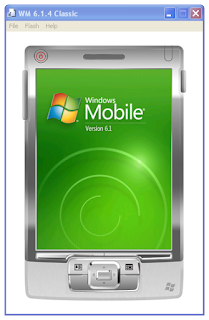
Windows Mobile 6 was a very interesting release, even though not so much in the technical manner. WinMobile 6 was powered by the Windows CE 5 operating system, geared towards PDA's and smartphones. Stability was further improved. The user interface was largely the same, but with a Windows Vista-ish theme applied to it now.  The home screen for Windows Mobile 6.1. The Today program had been installed, providing the Lunar phase illustration next to the LED clock. Using VMware Player 16, my XP VM had two cores allocated to it, along with 3GB's of RAM. The device emulator still wasn't the fastest in the world. This is due to the emulated ARM processor. Code translation would always be a bottleneck. However, this was to be expected, thus, so surprises here. With two cores though, performance of the emulated PDA was significantly improved. Thus, I could actually achieve video playback within Windows Media Player without too much skipping. My sample video was encoded using the WMV...

Emulating Old Hardware - The State Of Cellphones Before The iPhone

Image
The screenshots above is quite represented of what a typical cellphone was like in the middle-late 2000's. They ran a small, embedded OS that was tailed for that particular phone. The interface was quite simplistic, and the phones was just exactly that: a phone. The marriage of the phone and PDA was occurring, but it was still in progress. For the vast majority of want their media on the go, they would need to maintain a separate MP3 player/PDA if they wanted their entertainment on-demand.   These phones were not multimedia capable. The furthest extent of their multimedia capabilities was the ability to play short ringtones and display pictures at low resolution. As time went by, the flip-phone gained more features like playing short video clips at very low resolutions. However, by the time of those developments, smartphones were already leaving them behind in the dust. These flip-phones were very low-spec, and only had enough memory for the bare necessities, and nothing more. Yet,...

Old Hardware Emulated - Windows Mobile 5.0

Image
Working title for this post was "But Mama, That's Where The Fun Is!". Appropriate as by the middle 2000's, Windows Mobile was where all the action was at. The sky was only getting brighter for Microsoft as Palm was slowly imploding on itself. With Microsoft's mobile offerings becoming more widespread by the day, the Redmond Giant followed up with the newest version of WM, version 5.0, on May 2005. On the surface, it appears that little changed. However, the biggest change were "under the hood" with the incorporation of the .NET Compact Framework, which is basically the mobile version of .NET. Also, WM 5.0 introduced newer power-saving capabilities which often improved the battery life of devices by as much as 50%. WM backed up everything to flash memory. WinMobile would use a combination of RAM and flash memory to preserve battery life. This wasn't noticeable by the user.  As such, their is no data loss if power is lost.  Windows Media Player was upd...

Old Hardware Emulated - Windows CE.net

Image
Windows CE continued its evolution into different directions. While Windows CE and WinMobile are the same OS, they are package with different user interfaces for their respective markets. Windows Mobile was tailored for PDA's and smartphones while CE "classic" was still tailored for clamshell devices, which were still apparently a thing in 2003. However, their really wasn't much of a clamshell handheld market by this point. As such, most devices that CE 4.2 were destined for served a dedicated, niche role. Microsoft continued to support the clamshell form-factor handhelds with WinCE 4.0, released on January 7, 2002. This latest incarnation of WinCE featured the compact version of the .NET Framework. Also, like most new released, Microsoft released a updated SDK to developers. The SDK, like previous ones, included a device emulator along with various libraries, documentation, and developer tools so that one would become familiar with the platform. The applications were...

Old Hardware Emulated - The Continued Evolution Of Symbian (Games)

Image
Games would quickly dominate the Symbian platform. It only made sense as the Nokia handhelds found their way into the hands on millions around the globe. Combined this with the universal nature of the J2ME runtime and the thousands upon thousands of developers who were already familiar with the Java programming language, it would only be a short time before games would dominate the platform. I was able to get a taste of these games as most of them have been archived on well...Archive.org. Most of these games were loaded onto the SDK which supported the J2ME environment. However, compatibility greatly differed as many of these games usually conformed to different screen sizes, depending on the phone. Not all Symbian phones were created equal.  Many of the games expected a very small screen size, and thus, didn't scale well to the screen resolution of the device that I was using (240 by 320 pixel resolution). Despite that though, they were many games that did scale to the correct res...

Old Hardware Emulated - The Continued Evolution Of Symbian (3rd Party Applications)

Image
Their was no shortage of applications for the Symbian platform. The Symbian library became the largest of them all at a time when Palm was rapidly declining. Their were hundreds of programs available for such devices.  On one hand, one would be given a false impression as like in the case with WinCE, the vast majority of the software archive sites have shut down. However, many of these programs have been archived elsewhere, like Archive.org. Also, some of those mobile archive sites are still operating. This is where most of these programs came from.  Their were various programs that one could populate their Nokia device with. Their are various appointment keepers, calculators, media players, dictionaries. If one wanted to manage their finances and track their stock values, then there was an application for that. If one wanted to look up and element on the periodic table, then that could be done as well. Their was no shortage of web-browsers either.  If one needed directio...

Old Hardware Emulated: Palm Garnet, Colbalt, and Other Shenanigans, Oh My!

Image
If the history of Palm could be likened to that of The Rise And Fall Of The Roman Empire , then this would be the part of the story where the Roman Empire split itself into two. Palm splitting itself ranks among the dumbest things that the company could do to itself. Others describe it as the moment that killed Palm. Personally, I would agree. The company could have survived it as long as the split was better handled, and continued to have hit products while fixing their OS. Palm could have created something that would have caused corporate users to salivate over. However, this is Palm where talking about. This kind of luck wasn't in their cards. As such, the company split was essentially the beginning of the end. The company was split among its hardware and software division. The hardware company became PalmOne while the software company became PalmSource. For the hardware company, I'm still going to refer to it as Palm proper though. Anyway, the hardware team nee...

Old Hardware Emulating - The Continued Evolution Of Symbian

Image
  The Nokia S60 Platform Continues To Evolve By the middle 2000's, the Symbian-powered handhelds made by Nokia dominated the marketplace once held by Palm. The PDA was evolving into the smartphone, and Nokia was in the middle of transformation. Symbian was rapidly evolving to meet the needs of these new users. The smartphone continued to get bigger screens, along with full physical keyboards. The user interface of Symbian was revamped to accommodate these changes. However, their really isn't much to say about the base OS. The applications included were very basic and standard. The bigger-screen devices featured bigger icons, just like PalmOS. The launcher could have different themes. Their was a multimedia viewer that supported both JPG and GIF icons. Again, by 2006-2007, this was the norm. When it came to multimedia, their were limitations within the Nokia SDK Emulator. MP3 Playback didn't work. The codec wasn't incl...

Old Hardware Emulated: The Palm LifeDrive

Image
  The LifeDrive Ended Up On Life Support Instead As the 2000's continued, the Palm handhelds continued to lose their appeal. The Treo devices remained high sellers. However, the profit margins of these handhelds tended to be lower as they were geared towards the general consumers. Palm had made numerous attempts to gain a foothold into the lucrative corporate market, but to no avail. In 2005, Palm made yet another attempt into the corporate market with the LifeDrive. This device was geared towards power users who wanted corporate features while still having that recreational handheld capable of music and video playback. Palm defined this market as the "prosumer" market, as ridiculous as that word is (Is the phrase "power user" is too generic? ). The power user market (if one exist) is typically defined as one where the user wants all the general purpose features of a given handheld while still needing more powerful features. For example, IT...

Old Hardware Emulated : Windows Mobile 2003 Device Emulator Part 2

Image
  Third Party Apps 3rd Party Programs Running On The Pocket PC 2003 SDK Windows CE had a very decent-sized software library by 2003/2004. The platform was populated by various devices sold by many OEM's. It only made sense for software developers to target the platform. While WinCE's library was never as large as Palm's or J2ME, it was large enough where their users could make worthwhile use of their devices. As mentioned in previous articles, WinCE brought multimedia capabilities to the PDA. Handhelds like the Compaq iPAQ demonstrated that audio and video playback was possible on a small handheld. While the early Sony Clie handhelds running PalmOS had video playback, the video had to be encoded to gray-scale color depth in the PDB format. The video couldn't be that large. You weren't going to be watching that episode of Friends on your Palm anytime soon. While video encoding occurred with WinCE as well, their were far more options and...